Projects · Lagos
Funke Opeke laid 7,000 km of cable on the ocean floor. Your data bill fell overnight.
In 2010, Nigeria's BlackBerry bundle was cut in half the day a privately funded undersea cable went live. Most people never heard the name MainOne.
In 2010, your BlackBerry data price got cut in half overnight. Most people never knew it happened, because one woman laid a cable across the ocean floor.
In 2005, Funke Opeke returned to Nigeria as Chief Technical Officer of MTN. She was an electrical engineer, trained at Obafemi Awolowo University and Columbia. In the US, she had risen to executive director in Verizon’s wholesale division.
At home, the problem wasn’t the phones. It was what happened after your call or your web page left the country. Nigeria’s international traffic depended largely on one undersea cable, SAT-3. Capacity was scarce, and it was expensive.
An unreasonable conclusion
After MTN, she advised Transcorp on its takeover of NITEL and briefly ran it as chief operating officer. That put her close to SAT-3 itself. And she reached a conclusion that sounded unreasonable: building a brand-new cable might make more sense than fixing access to the old one.
You can’t build a small version of a submarine cable to test the idea. It meant laying 7,000 kilometres of fibre on the ocean floor, from Portugal to Lagos and Accra. MainOne put the cost at around $240 million. She reportedly used her own savings to fund the early feasibility studies. Then she had to convince investors that a private Nigerian company could do what was usually left to governments and large telecom consortiums.
The team promised to deliver in two years. In July 2010, the cable went live. MainOne says it came in on time and on budget.
The proof
The proof showed up fast. MTN was the first anchor customer. The day the cable was lit, MTN cut its BlackBerry internet bundle in half. Most of the people paying less never heard the name MainOne. That’s how infrastructure works: people only notice it when it breaks.
She kept building. A cable extension to Cameroon in 2015. Data centres in Lagos, starting with a $40 million facility in Lekki. More than 1,200 kilometres of fibre on land across Lagos, Edo and Ogun.
In 2022, Equinix, one of the biggest digital infrastructure companies in the world, completed its purchase of MainOne for $320 million. It was Equinix’s first move into Africa.
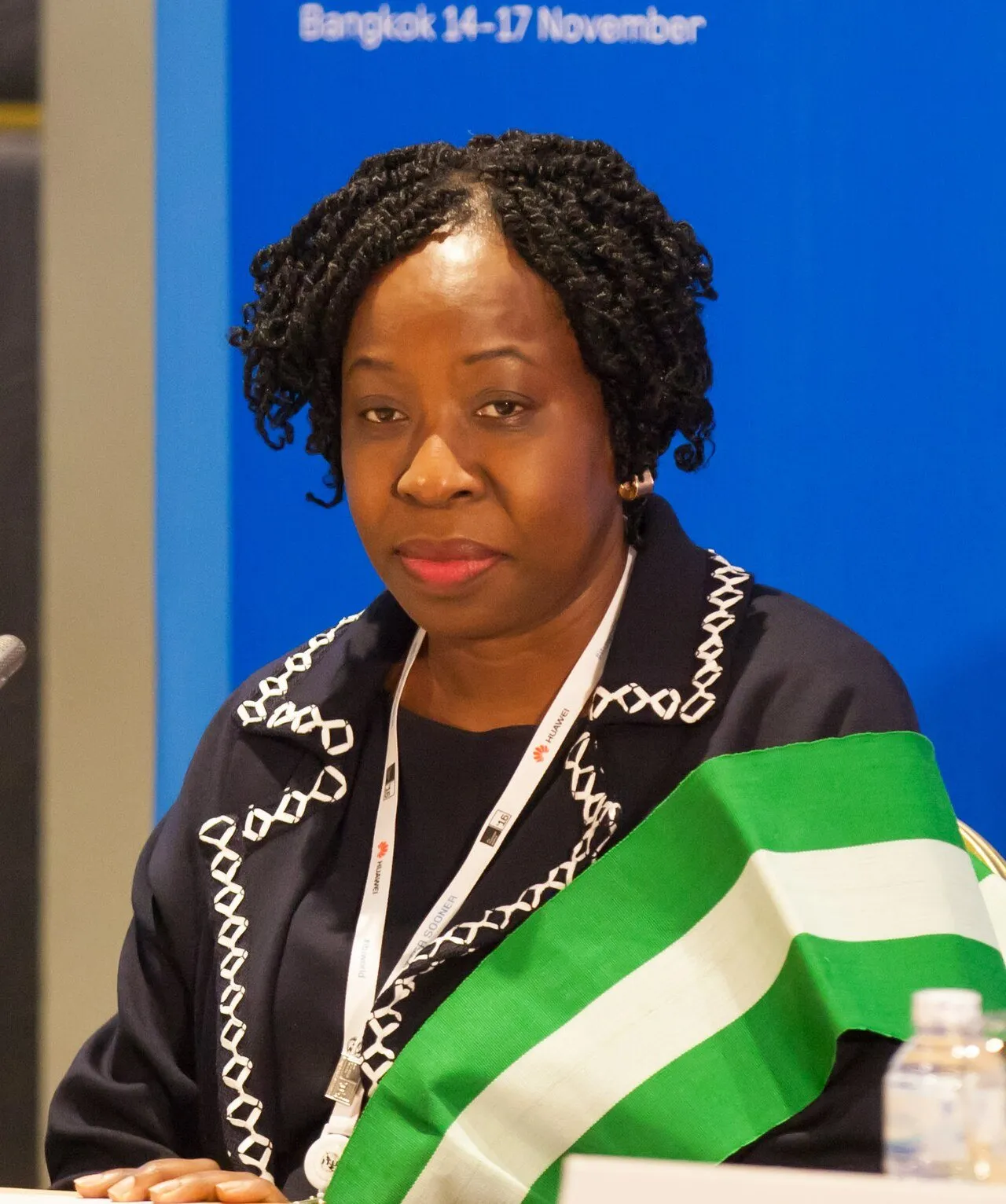
Funke Opeke came home as an engineer. She ended up laying the road Nigeria’s internet travels on. This is Funke Opeke, the founder of MainOne, one of the people building Nigeria.
■
Photo credits
- Funke Opeke at ITU Telecom World, 2016: ITU Pictures / Wikimedia Commons, CC BY 2.0 (licence)
- A cable-laying ship, the kind of vessel used to put fibre on the sea floor. Not the MainOne ship: Taiwankengo / Wikimedia Commons, CC BY-SA 4.0 (licence)
- A data centre. MainOne went on to build its own in Lagos: BalticServers.com / Wikimedia Commons, CC BY-SA 3.0 (licence)